Newsletter: Planet Pala Winter 2025

Planet Pala Newsletter
The Pala Environmental Department and Planet Pala announce the Planet Pala Winter 2025 Newsletter.
Letter from the Director
Welcome to News from Planet Pala.
I don’t know about you, but I have always loved the cold weather and long, cozy nights that characterize this time of year. It may seem strange, but the winter solstice, which marks the first official day of winter, is actually when the days start getting longer again! But we’re still in for months of cool weather and short days until spring, so if you’re like me, take advantage of hot cocoa, warm fires, and cozy sweaters while you can. It helps to follow the lead of our animal and plant relatives, who hunker down during these months to stay warm, conserve energy, and rest before the hustle and bustle of spring returns.
Now is a perfect time to visit Pala Atáxam Pemtew’náan’a, (Pala People’s Garden) next to the Pala Admin Building. Even in winter, flowers are still in bloom, hummingbirds, bees, and butterflies abound, and sprouting plants are emerging. We are blessed to live and work in Pala, where even in winter, we are surrounded by life and color.
You can read all of our newsletters in the Planet Pala Newsletter archive.
Please contact us with comments, questions, or suggestions. We are here for Pala and you!

Celebrating Indigenous Peoples’ Day at the Safari Park
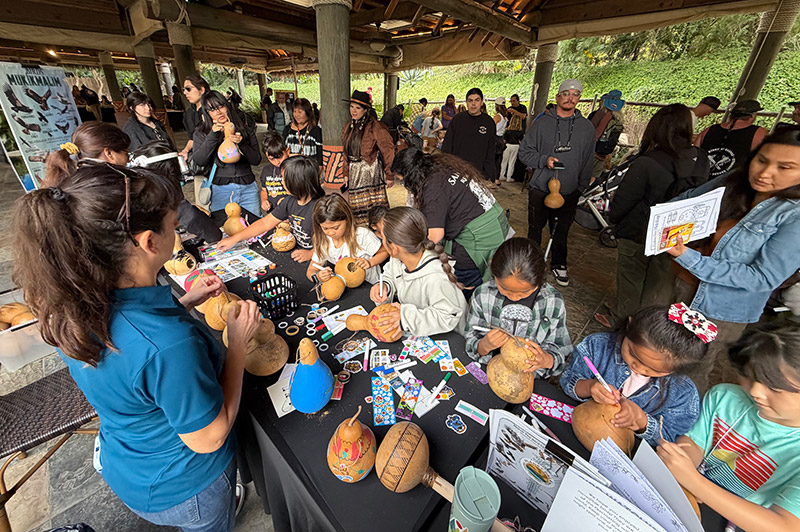
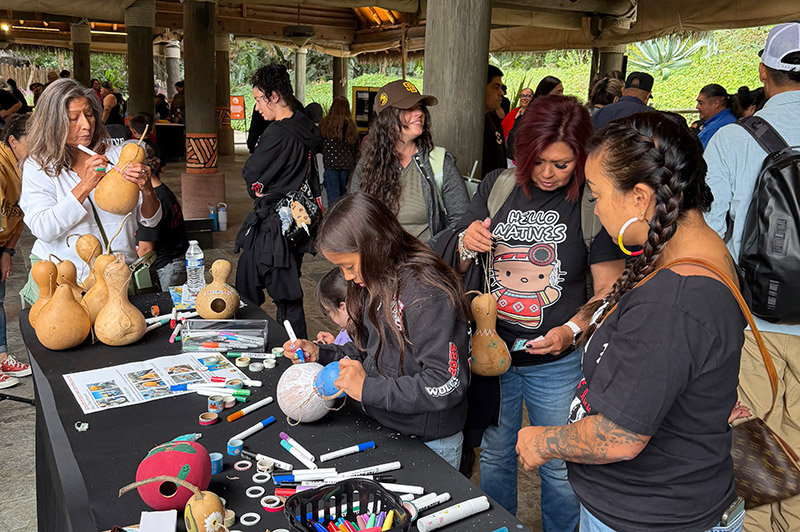
On October 13, 2025, the Pala Environmental Department attended the Indigenous Peoples’ Day Celebration at the San Diego Zoo Safari Park.
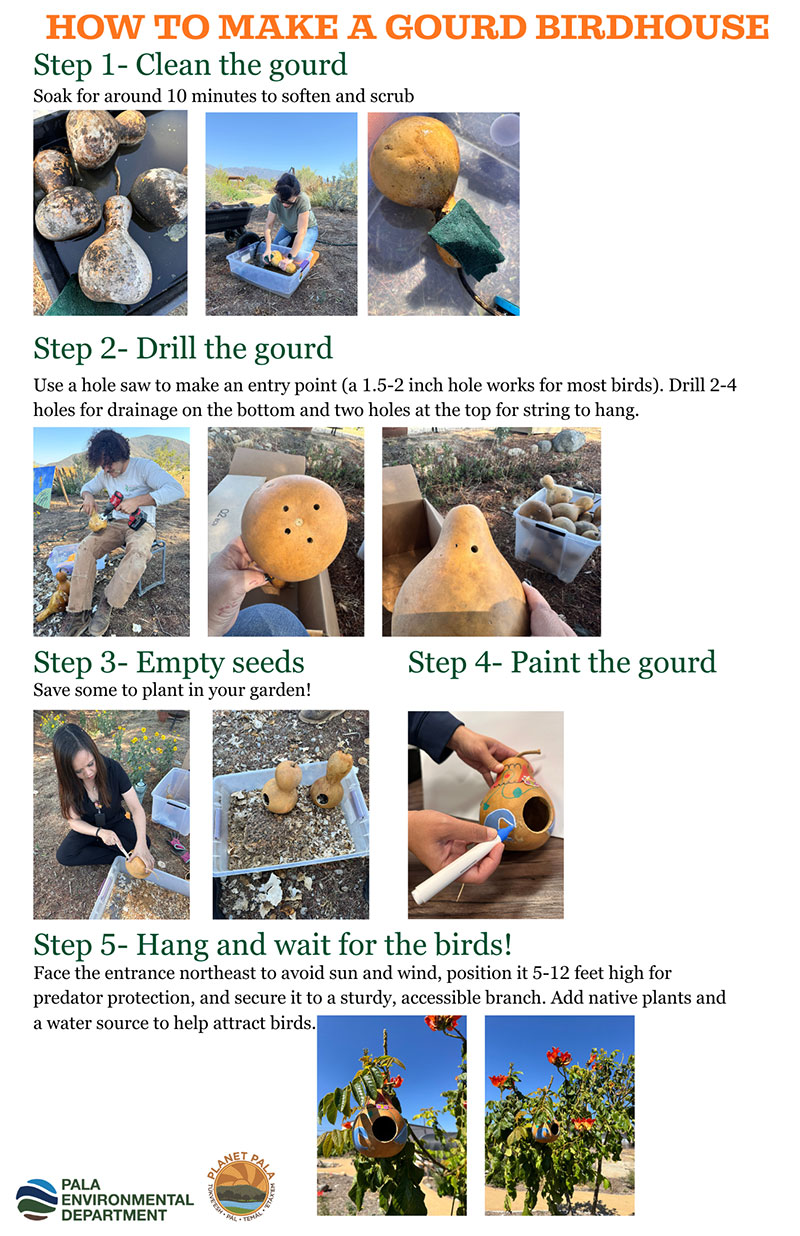
Our activity this year was building gourd birdhouses. We also provided information about local birds, Birds of Pala coloring books, and gourd seeds. We did the hard work of cleaning the gourds and drilling holes for the birds beforehand so the kids could have fun painting them.
How to Make a Gourd Birdhouse
There are five basic steps to building a gourd birdhouse:
- Step 1: Clean the gourd. A lot of gourds will come dirty, so a good scrub will help.
- Step 2: Drill the holes. For the main entrance, you will need a hole that is 1.5-2 inches wide. You will also need 2-4 drainage holes on the bottom and two at the top for the string to hang the gourd.
- Step 3: Empty the seeds. You can keep some to plant in your garden and share with friends and family.
- Step 4: Decorate. Sharpies and paint pens work best. Acrylic paint also works well, but takes longer because you must wait for it to fully dry between layers.
- Step 5: Hang for the birds. Try to face the entrance to the north east to avoid direct sun, and 5-12 feet high for predator protection. Adding native plants and a water source nearby can help attract birds.
Does this sound like a fun activity? You should try it at home.
Engaging Outreach at Vivian Banks Charter School
The Pala Environmental Department (PED) has had a busy and successful fall, bringing three exciting environmental outreach events to the students of Vivian Banks Charter School. Using grants and departmental resources, these activities have helped connect students with nature, sustainability, and the importance of environmental stewardship.
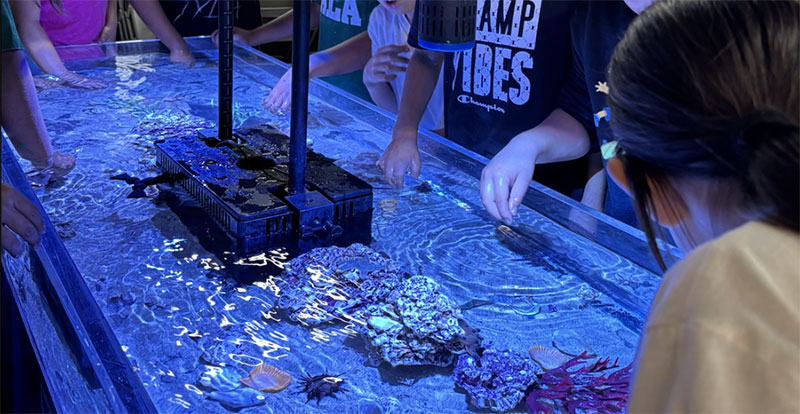
September: Bringing the Ocean to Pala with the Traveling Tide Pools
In September, PED used grant funds to host the Traveling Tide Pools experience right here in Pala. This unique, hands-on event brought the mysteries of the Pacific Ocean to the students. Children had the opportunity to touch and learn about real-life sea stars, sea urchins, hermit crabs, and other marine invertebrates. It was a fantastic way to underscore the interconnectedness of all environments, even those far from the coast, and to spark curiosity about marine biology.
October: Ready, Set, Recycle! The Recycling Relay Race
In October, PED focused on the critical topic of waste reduction and recycling by hosting a high-energy Recycling Relay Race. The day began with an educational discussion on why we recycle and how to sort different materials properly. Students then put their knowledge to the test in a fun, competitive race. They had to quickly and correctly sort various “recyclables” into the correct bins.
A huge shout-out goes to Mrs. Loredo’s 1st/2nd-grade combo class, who demonstrated outstanding sorting skills and teamwork during the races. Awesome job!
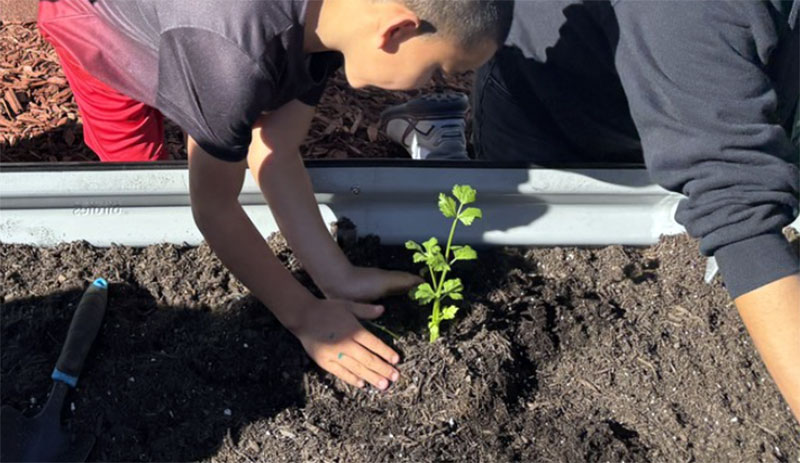
November: Planting the School Garden
As the weather cooled, PED concluded the fall series with a Planting Day in the school garden in November. Students got their hands dirty planting a variety of healthy vegetables, including spinach, broccoli, romaine lettuce, rainbow swiss chard, and celery, alongside onion bulbs and carrot seeds. This activity provided a direct lesson on the plant growth cycle, photosynthesis, and how to care for plants in the school garden.
We want to give a special shout-out to Ms. Flores’ 4th/5th combo class. They enthusiastically planted many extra seeds and bulbs in hopes of a bountiful harvest.
Looking Ahead
These three events are just the beginning. PED enjoys supporting environmental education at Vivian Banks Charter School and plans on continuing to host more fun and informative environmental activities throughout the rest of the school year.

Healthy Air, Healthy Community
PED is proud to share that we are working on an important community health project funded through the California Air Resources Board’s (CARB) Local Community Emissions Reduction Program (L-CERP). This statewide program was created to help communities most impacted by air pollution take direct action to reduce emissions and improve local air quality.
With support from this program, we are developing a new Emissions Inventory Tool to better identify and track sources of air pollution in and around our community. This effort will provide valuable data to guide future air quality improvements, strengthen our environmental programs, and ensure that our community’s voice is represented in local and regional air quality planning.
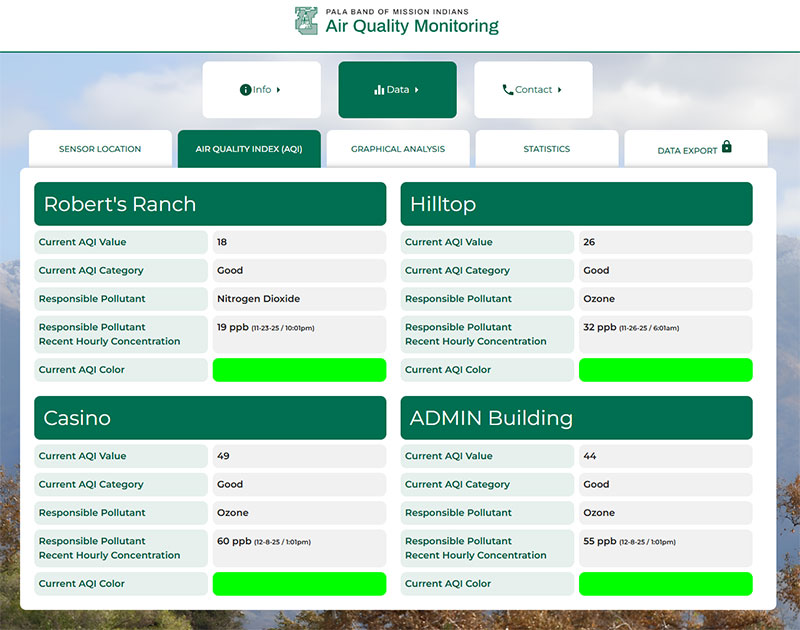
In addition to this tool, we encourage community members to explore AirPala.com, a public website that helps residents access real-time air quality information. The site allows you to view local air monitoring data, learn about different pollutants, and take steps to reduce your exposure when air quality is poor.
Typically, ozone and particulate matter 2.5 (PM 2.5) are problem pollutants during the summer, which can affect health—especially for children, elders, and those with respiratory conditions.
By checking AirPala regularly, you can stay informed about daily conditions and make safer choices for outdoor activities. And if you want to check Pala’s air quality, you can find current conditions on the PED website.
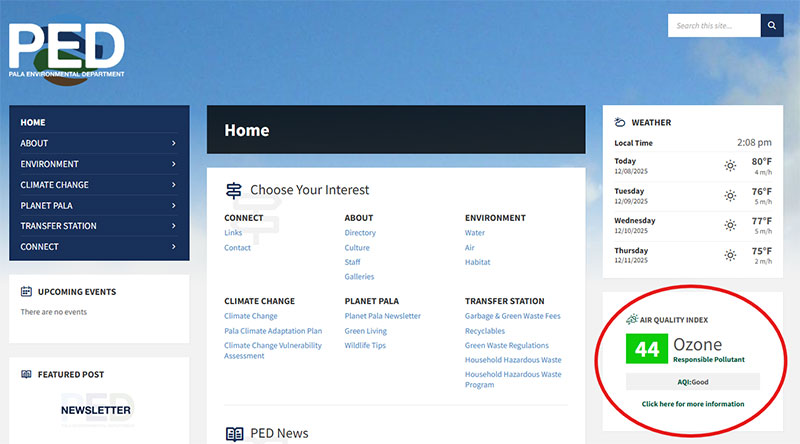
Questions? Contact Darold Wallick, PED’s Air Quality Specialist, at 760-891-3540, or email us at ped@palatribe.com.

Spring into the Greenhouse
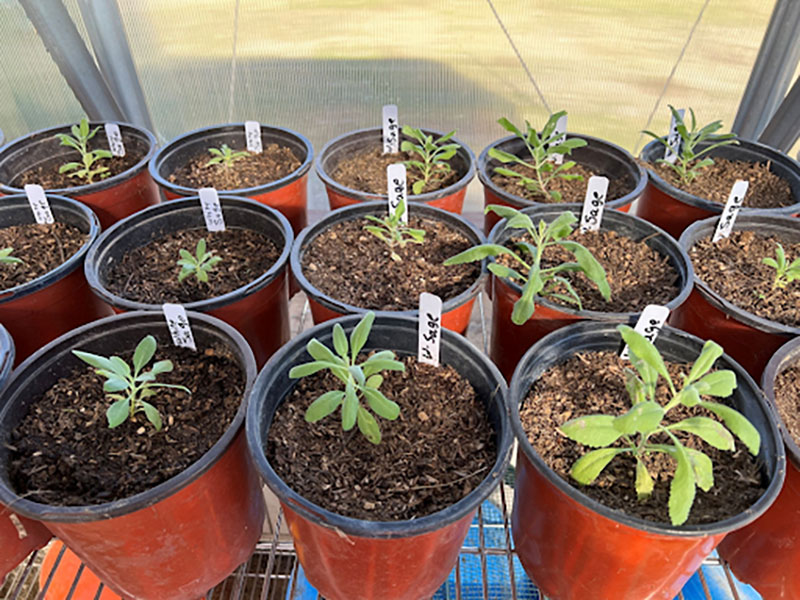
It may be winter outside, but in the greenhouse, it’s more like spring. We have many different plants in the greenhouse growing from seeds, cuttings, and sprouts, including California fuchsia, pine leaf milkweed, desert willow, Cleveland sage, coyote bush, giant wild rye, and white sage.
Some of these baby plants are destined for life in Pala Atáxam Pemtew’náan’a (Pala People’s Garden), and others will help us restore native habitats in areas around Pala. We will also have enough to share with members of the Pala community who want to grow their own native plant gardens.
Come by Pala Atáxam Pemtew’náan’a any time to visit the greenhouse, or simply to enjoy this beautiful space. Remember, Pala Atáxam Pemtew’náan’a is the Pala People’s Garden, and it is for you.

Reindeer: Not just for Santa!
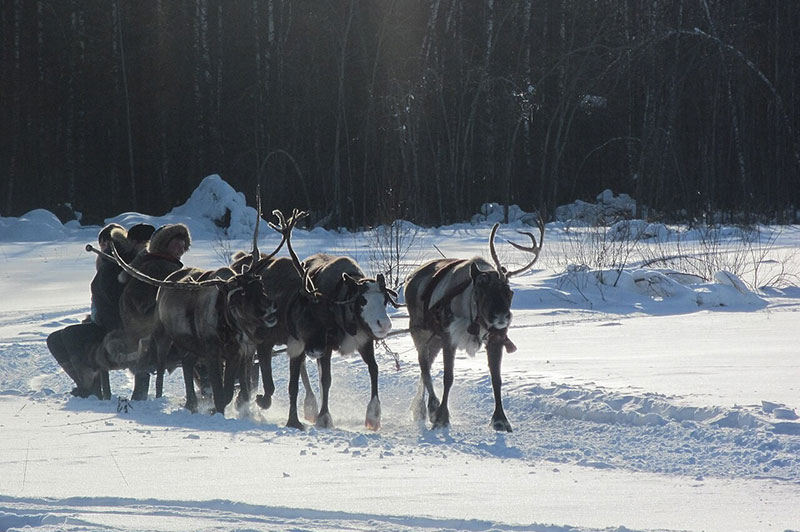
Reindeer are found around the North Pole, which encompasses the uppermost reaches of North America, Europe, and Asia. In Alaska and Canada, wild reindeer are usually called caribou. The name caribou is a French translation of the Mi’kmaq word, which means “snow shoveler” because these animals often dig through snow to find food. In the winter, reindeer consume a lot of lichen. They are among the few mammals that regularly eat lichens.
Reindeer have been important for food and clothing for people around the world. They have also been domesticated. Just as they do for Santa Claus, reindeer pull sleds and carry goods. Reindeer can also be milked, so you could include reindeer milk with your cookies for Santa.
Both male and female reindeer grow very heavy antlers, unlike many other deer species, where only the males grow antlers. Males lose their antlers in the fall and regrow them in the spring; however, females keep their antlers through the winter. That means that Santa’s reindeer are probably female. Unlike other deer species, they also have hair on their noses and hooves.
Was Rudolf’s nose shining through all the fur? All these adaptations help keep reindeer safe in the cold, snowy north and allow them to find and protect their food sources all year, even in enormous herds that may reach almost half a million animals.

Potential New Sewer Line on the South Side of Pala
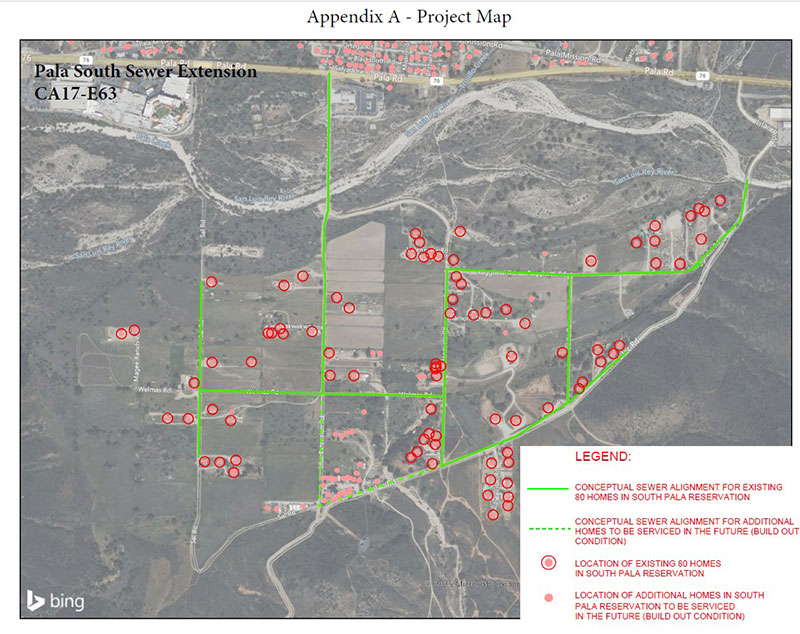
The Pala Tribe just got grant funding to build a sewer line on the south side of the Pala Reservation that would connect everything south of Highway 76/the river to our existing wastewater treatment plant. This would enable all of our tribal residents who live south of the river to connect to this new system and have their current septic tanks removed for free, with all removal costs covered by the grant.
Having a septic system on your property can be a headache – you have to maintain and pump the system every few years, you cannot park or plant over the leach lines or tank, and you have to be very careful about what you flush down the toilet or down the sink (no food, no wipes, no oil/grease, no bleach, etc.). And, if that’s not enough, they are very costly to repair or replace if they fail – a new septic tank can cost up to $40,000 to replace!
Additionally, septic systems that homeowners do not adequately maintain can fail and contribute pollutants into our groundwater (the source of Pala’s drinking water). This means contamination from septic systems can hurt everyone who drinks the water, not just the individual homeowner.
That is why the Pala Tribe pursued grant funding to build a new sewer line on the south side, so that all of our residents can benefit from being connected to our top-of-the-line wastewater treatment plant, and not worry about the headaches that come from septic systems.
We Need Your Help
If you live on the south side of Pala (south of Highway 76/river), we need your input on this project and, potentially, your permission as we start construction. We also need to obtain signatures from enough residents who are interested in having sewer service installed at their homes to make this project worth pursuing. Otherwise, we may lose our funding entirely.
This is a time-sensitive endeavor, and we need to obtain resident permissions by January/February 2026.
If you live (or own property) on the south side of the reservation, please contact Heidi Brow to see how you can get a sewer line connected to your home, and help give your input to the project. She can help show how close your home is to the proposed sewer lines and whether any of the lines might cross into your property.
Resolve to Get PREPped in 2026
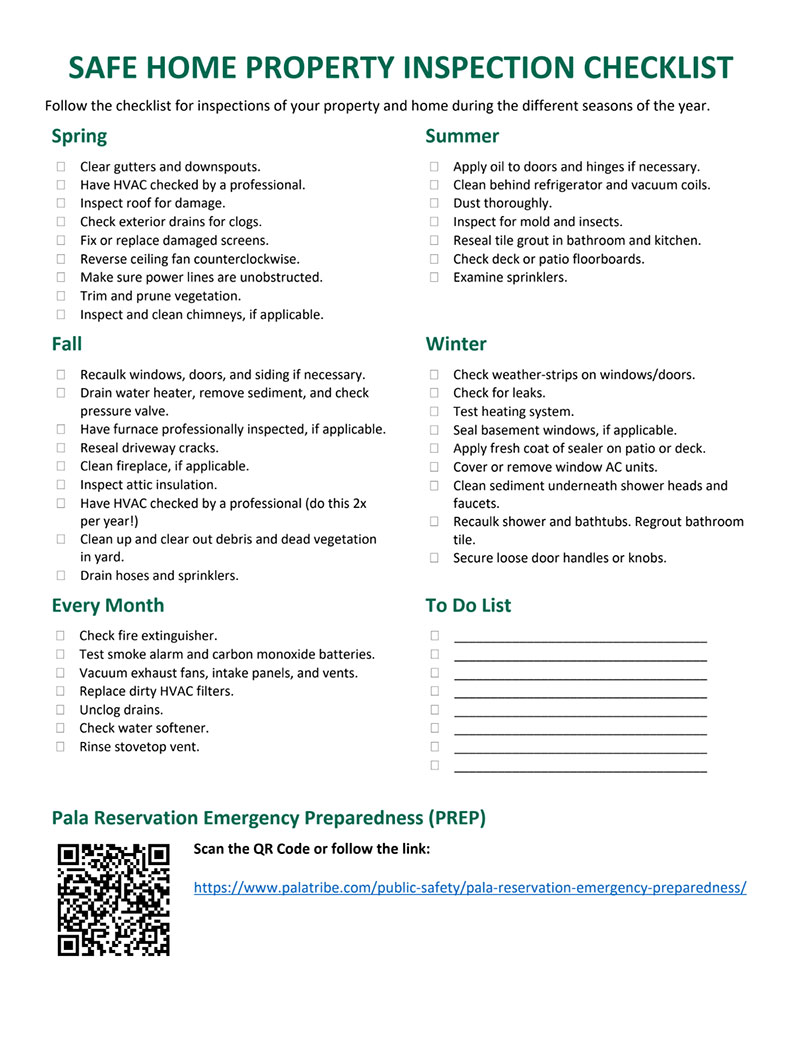
As we welcome a new year, many of us make resolutions to improve our health, home, and habits. This year, the Pala Reservation Emergency Preparedness (PREP) team invites you to add one more meaningful goal to your list: Resolve to Get PREPped!
Disasters don’t wait for the right time, and being prepared is one of the most important steps we can take to protect our families, homes, and communities. The PREP program—created by the Pala Environmental Department—is here to help every household build confidence and readiness for emergencies.
Build Your Household Disaster Plan
A strong emergency plan ensures your family knows what to do, where to meet, and how to communicate during a disaster. PREP provides easy-to-use templates, including the Emergency Contact Information Sheet, Wallet Cards, and Reunification Spots.
Visit the Pala website to learn how to safely evacuate from each neighborhood on the Reservation. You can also pick up a magnet in the Administration Building listing Public Safety & Emergency Services Numbers for quick access during an emergency.
Build Your Go Bag, Shelter-in-Place Box, and Car Safety Kit
You never know where you will be when a disaster strikes. Plan today to have the right supplies on hand to protect yourself and your family. The Pala Disaster Preparedness Handbook (hard copies available in the Administration Building) includes detailed checklists for all your preparedness needs.
When building disaster supply kits, remember to consider the unique needs of family members—such as medications, mobility devices, infant supplies, or pet needs. All kits should include:
- Food and water
- Communication devices
- Emergency supplies
- Personal items
Being ready wherever you are—at home, in your vehicle, or out in the community—can save lives.
Stay Informed
Register for Pala’s Emergency Alert System to receive email and text messages during emergencies, so you know what action to take.
PREP Keeps Working for You
The PREP team is committed to strengthening emergency preparedness across the Reservation. In 2026, we hope to offer expanded training opportunities, increased inter-departmental collaboration, and broader community involvement. Keep an eye out for upcoming announcements and ways to participate.
Together, We Build a More Resilient Pala
Every family that gets PREPped strengthens the entire Pala community’s resilience. This New Year, let’s commit to protecting what matters most—our people and our land.

Winter Solstice Celebrations from Around the World
The winter solstice marks the first day of winter and the longest night of the year in the Northern Hemisphere. Since ancient times, people around the world have recognized this important astronomical event and celebrated the subsequent “return” of the sun and longer days in a variety of ways. Old solstice traditions have influenced holidays we celebrate now, such as Christmas and Hanukkah.
How does your family celebrate the winter season?
Here are some solstice traditions, both new and old, to help light your way to longer days… View the seven traditions from around the world!
Planet Pala
Welcome to Planet Pala. This is the place to learn how you can help the Pala Environmental Department protect Mother Earth. Come to Planet Pala to learn about Pala’s plants and animals, discover how to do your fun activities like building a DIY bee habitat or planting a pollinator garden, and get tips on healthy, green living.
Planet Pala Newsletter Sign-up
Before You Go…
Did you receive this newsletter via email? Was it forwarded to you from a friend or family member? Help us spread the News from Planet Pala by making sure you are signed up on our subscription list and by sharing this newsletter. We are glad you are here!
Pala Environmental Department
For more information, contact the Pala Environment Department:
760-891-3510 | ped@palatribe.com | ped.palatribe.com